
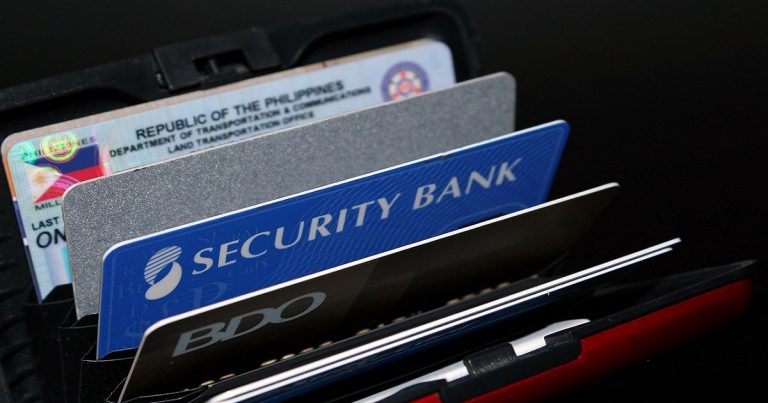
While traditional piggy banks might be cute, having a savings account as a student is still one of the best ways to keep your money safe.
The good news? Opening a bank account in the Philippines has become dramatically easier since 2022, thanks to digital banks, the PhilSys National ID, and online TIN registration.
Students who are away from their families will also find it more convenient to receive their monthly allowance through bank transfer. This is a common reality for college students who left the provinces for universities in Manila, Cebu, or Davao.
In the past, students worried about securing a valid government ID and affording the hefty initial deposits banks require.
In 2026, most of those barriers are gone. This guide walks you through the easiest savings accounts Filipino students can open today, including zero-maintaining-balance digital options.
Best bank accounts for students in the Philippines (2026)
NAME | INITIAL DEPOSIT | REQUIRED IDs | MAINTAINING BALANCE |
|---|---|---|---|
BDO Basic Account (online) | ₱0 | 1 valid primary ID (PhilSys preferred); online KYC via BDO app | ₱0 (₱100,000 max balance) |
BPI #SaveUp (online/app) | No required initial deposit; ₱30,000 account limit until identity verification | 1 valid primary ID + selfie; opened in the BPI mobile app | ₱0 |
BDO ATM Savings (branch) | ₱2,000 | 2 valid IDs, billing statement, proof of income/remittance, 2×2 photo | ₱2,000 |
GoTyme Bank (digital) | ₱0 | 1 valid primary ID; instant Visa debit card printed at any mall kiosk | ₱0 |
Maya Bank (digital) | ₱0 | 1 valid primary ID; in-app KYC | ₱0 |
⭐️ For a full breakdown of digital options, see our roundup of digital banks in the Philippines.
Getting a valid ID

One of the biggest worries students used to face was getting a government-issued ID.
In 2026, this is much easier because the Philippine Identification System (PhilSys) National ID has rolled out nationwide and is now the most widely accepted primary ID for bank account opening.
Easiest valid IDs for students
- PhilSys National ID (PhilID or ePhilID) — free to obtain, accepted by virtually every Philippine bank. Register at any PSA PhilSys registration center. The digital version is also available through the eGovPH app
- Passport — apply through the DFA passport portal.
- Postal ID — apply at any PHLPost branch.
- NBI Clearance — apply online via NBI Clearance Online.
- School ID — still accepted as a supporting ID by most banks.
Your PSA birth certificate and Barangay Clearance are also commonly accepted as supporting documents for students who don't yet have a second primary ID.
Securing a TIN Number online

A Tax Identification Number (TIN) is often required by banks.
The good news for 2026 is that you no longer need to queue at your local BIR RDO.
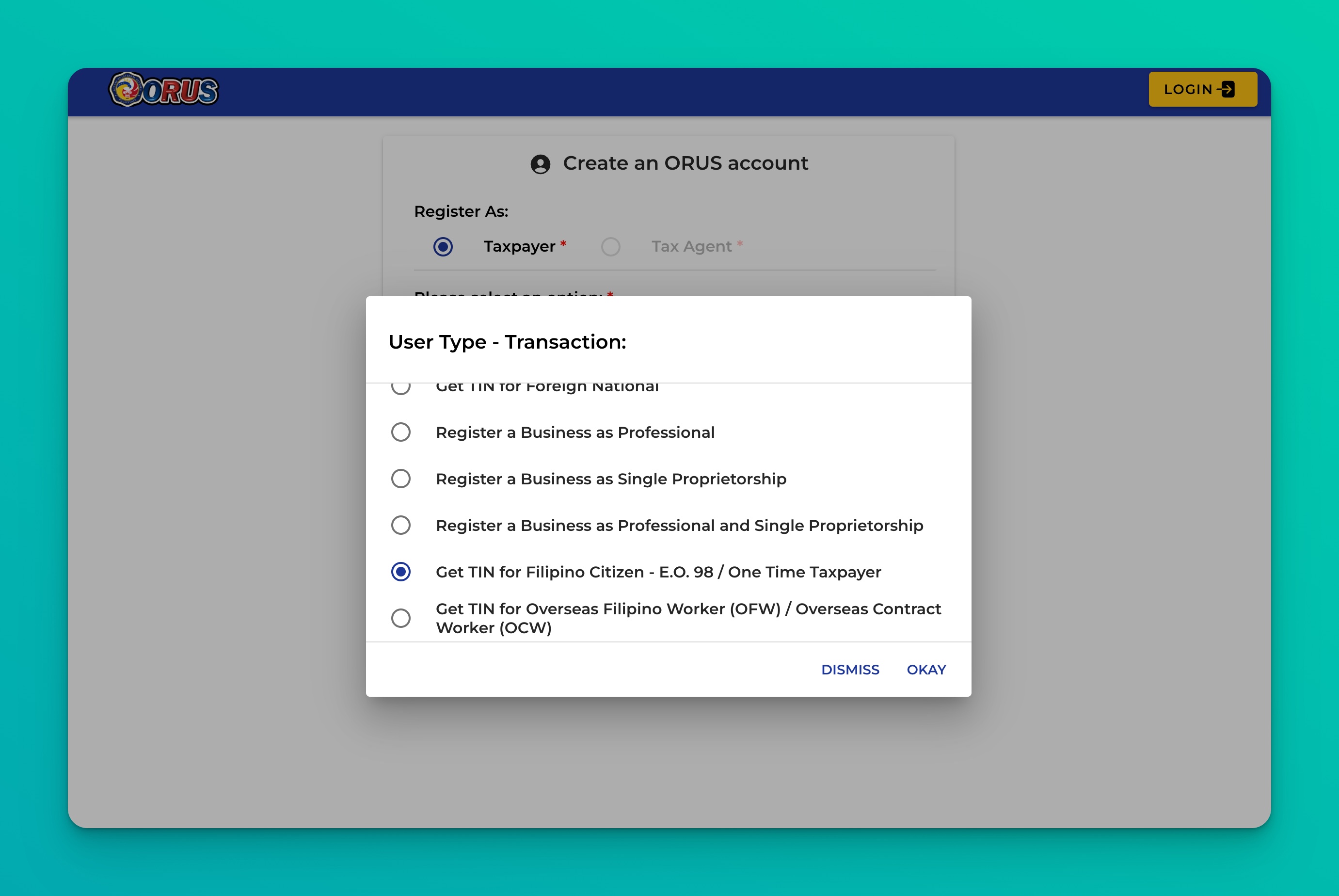
Under Executive Order No. 98, students, first-time job seekers, and unemployed individuals can secure a TIN for bank dealings, and it can now be done entirely online through the BIR Online Registration and Update System (ORUS).
How to apply for a TIN via ORUS
- Go to orus.bir.gov.ph and click New Registration
- Select As an Individual, then Without Existing TIN.
- Choose Get TIN for Filipino Citizen – E.O. 98 / One-Time Taxpayer.
- Select Executive Order No. 98 – Filipino Citizen (EO98FC) as your taxpayer type.
- Fill in your personal details and submit.
- Wait for the email confirming your TIN has been approved — then log back in to view your TIN number.
Proof of address (billing statement)

The billing statement doesn't need to be in your name. It can be under your parents' or relative's name. You can also submit an authorization letter from the registered bill payer confirming you reside at the same address.
A Barangay Certificate or Barangay Clearance is also widely accepted by banks as proof that you live in the area.
You'll also need a registered local mobile number
Since the SIM Card Registration Act took effect in 2022, a registered Philippine mobile number is required for mobile banking enrollment, OTP verification, and app-based account opening.
Make sure your SIM is registered in your name before applying — especially for digital banks where the entire onboarding happens on your phone.
Digital banks: the easiest option for students in 2026
If you want to skip the branch visit entirely, BSP-licensed digital banks let you open a fully-functional peso savings account from your phone in under 10 minutes.
Most require only a single valid primary ID and have zero initial deposit and zero maintaining balance.
- GoTyme Bank. Free Visa debit card printed on the spot at any mall kiosk. Great for students without a strong address history.
- Maya Bank. High-yield savings integrated with the Maya e-wallet; perfect if you already use Maya for QR payments.
- SeaBank. Competitive interest rates with fully app-based onboarding.
- Tonik Digital Bank. The first BSP-licensed digital bank in the Philippines, with some of the strongest time deposit rates.
- UNO Digital Bank. Multi-"stash" savings to help you budget your allowance.
- Komo Bank. Another fully app-based peso savings option from EastWest.
For a side-by-side comparison, see our roundup of digital banks in the Philippines that let you open a savings account online.
Your deposits are PDIC-insured up to ₱1 million
Whichever bank you pick, your deposits are insured by the Philippine Deposit Insurance Corporation (PDIC) up to ₱1,000,000 per depositor, per bank, effective 15 March 2025 (doubled from the previous ₱500,000).
This applies to both traditional and digital banks.
For a deeper dive, read our explainer on the PDIC deposit insurance scheme and what it covers.
Final thoughts for students
With enough knowledge and a little patience, it's not impossible to open a savings account as a student, and this year, it's honestly never been easier.
A lot of people get discouraged when they see a long list of requirements, but the truth is, most of the IDs and documents are straightforward to obtain, especially if you start with your PhilSys National ID.
Don't hold back just because the process requires a little more effort from you. Your future self will thank you later for opening a savings account today. And if you're ready to level up your money game, check out our guide on savings accounts that actually earn or the 7 types of bank accounts every Filipino should open.
Share your thoughts in the comments section below — which bank did you choose as a student, and would you recommend it?